


"...I went in for a dental clean yesterday and the dentist said there was nothing to clean..."
Nature's original toothbrush
80 years ago, someone decided we should brush our teeth with hardened petroleum.
The plastic toothbrush is 86 years old. Miswak is 7,000. One of them was invented to be sold. The other just... works. Here's why entire cultures still use the original.
4.7/5 from 15,000+ verified buyers
Try the Enhanced Miswak — 30 day guarantee
Releases minerals
Fights plaque
Kills bacteria
7,000
Years of documented use
89%
love it after trying it once
0
Chemicals, plastics, or synthetics
Timeline of the plastic toothbrush
Who convinced us it was a good idea to put plastic in our mouth?
The plastic toothbrush was invented in 1938 from nylon — a petroleum derivative. Before that, humans cleaned their teeth with natural sticks for thousands of years. Then one version got a patent, a factory, and a marketing budget. The other didn't. Here's what happened next.
1938
Nylon meets your mouth
DuPont introduced the first nylon-bristle toothbrush. Nylon is a synthetic polymer made from petrochemicals — the same industry that John D. Rockefeller's Standard Oil had spent decades making indispensable to modern life. By the 1930s, petroleum derivatives were finding their way into everything: plastics, cosmetics, medicine, and now apparently, the thing you put in your mouth every morning.
1950s
Toothpaste gets foamy
SLS — sodium lauryl sulphate — gets added to toothpaste. It's an industrial detergent also used in engine degreasers. It doesn't clean your teeth better. It just makes foam, and foam feels like something is working. It's been in most toothpastes ever since.
Today
90% of adults have had a cavity
After 80+ years of the most advanced, dentist approved, oral care routine in history, 9 in 10 American adults have experienced dental decay. The profits got better. The teeth didn't. Meanwhile the populations still using natural tools quietly continue having some of the lowest cavity rates on earth.
The nourishment problem
Your toothbrush cleans your teeth.
It doesn't feed them.
Think of it like food. A highly processed meal can technically provide calories — but strip away the nutrients and all you're left with is energy without nourishment. Your teeth work exactly the same way. A plastic brush and chemical toothpaste clean the surface but put nothing back. Every day your teeth spend getting cleaned but never fed is a day enamel thins a little more.
Plastic toothbrush
Cleans mechanically
Moves debris off the surface. Leaves behind microplastic particles. Deposits nothing. Like rinsing a plant with distilled water — technically wet, but starving.
Miswak
Cleans and nourishes
Scrubs away bacteria and plaque while releasing natural silica, calcium, and antimicrobial compounds directly into your enamel. Cleaning and feeding at the same time.
It's not that the plastic toothbrush is bad exactly. It's that it was never designed to give anything back. The miswak was.
The power of natural
One Stick. Six Benefits.
No chemicals. No toothpaste. No plastic.

🦷 Whiter Teeth
Natural silica polishes enamel and lifts stains — no bleach, no abrasives.

🛡️ Kills Bad Bacteria
19+ natural antibacterial compounds fight cavities and gum disease at the source.

💨 Eliminates Bad Breath
Works at the source, not the symptom. Antiseptic compounds keep breath fresh for hours.

🌱 Strengthens Gums
Tannins and anti-inflammatories build stronger, healthier gums over time.

✅ No Toothpaste Needed
The stick is the toothbrush and toothpaste combined. Simplify everything in one move.

🌍 7,000 Years of Proof
Used continuously across continents for millennia. The original clinical trial.
Something worth knowing first
Miswak is completely natural. But it's a different experience from what we're used to.
Our miswaks have no additives, no processing, no synthetic flavor enhancements unlike modern toothpastes. — for most of the world using it, that's exactly the point. But for palates raised on mint and foam, the natural taste takes some getting used to.
Day 1–3
The unfamiliar part
Earthy, slightly sharp, nothing like mint or foam. Most people notice this immediately and wonder if they'll get used to it.
Week 1–3
Where most people land
The taste stops registering as strange. This is also roughly when the results — whiter teeth, stronger gums — start becoming noticeable.
Some people
Never fully adjust
The taste stays a small daily friction. Eventually it's enough to make them quietly go back to their old toothbrush — before the results ever show up.
The adjustment period isn't a flaw in miswak. It's just what happens when something 7,000 years old meets a palate raised on mint and foam.
An enhanced miswak
A miswak, but with even more benefits
How to prepare the miswak by itself
It takes 30 seconds
It takes 30 seconds
1
Peel back 5mm of bark
Exposes fresh fibres — these are your bristles.
2
Chew the tip until soft
Takes ~30 seconds. Fibres naturally splay out like a brush head.
3
Brush — no toothpaste needed
Cleans, whitens, and freshens breath all in one go.
4
Trim & repeat
When the tip wears, trim and chew a new section. One stick lasts weeks.
For a natural sweet flavor
How to infuse your miswak with Cinnamon and Clove
Infusing the miswak not only enhances the flavor, it also adds extra antibacterial and anti-inflammatory benefits that are great for the teeth and gums.
1
Peel back 5mm of bark to expose the fresh fibres, same as step one above.
2
Fill a bowl with 250ml of water and empty one flavor sachet in, stirring until dissolved.
3
Submerge the peeled tip and leave it to soak overnight so the infusion reaches the exposed fibres.
4
Remove the stick and rinse. Chew the tip soft and brush as usual — the flavor is now in the bristles themselves.
The oldest clinical trial in history
7,000 years of documented use.
You don't use something for 7,000 years by accident. Across Africa, the Middle East, and Asia — generations of people who had access to nothing else discovered that this stick was all they needed. No dentist. No toothpaste. No plastic. Just a plant that happened to clean, nourish, and protect better than anything that came after it.
The WHO endorses it. Peer-reviewed studies back it. But honestly — 7,000 years of consistent daily use across multiple continents is a more convincing track record than any clinical trial.
→
Endorsed by the WHO as an effective oral hygiene tool
→
Some of the lowest cavity rates on earth in populations that have never stopped using it
→
No toothpaste, no plastic, no dentist — and better outcomes than the modern routine
The message is spreading.
The stick that's been going viral everywhere
What to expect
Results, realistic timeline.
Most people notice a difference faster than they expect. Tap any milestone to see what's happening.
🌱
Day 1
A different kind of clean
✨
Day 3–7
Teeth visibly whiter
💨
Day 7–14
Bad breath gone
🛡️
Day 14–21
Stains clearing
🌿
Day 30
Full results
Day 1
A different kind of clean
Felt from first useThe natural antibacterial compounds go to work immediately. Most people notice their mouth feels cleaner for longer than usual — no film, no morning fuzz. It's a different sensation to toothpaste: quieter, but more thorough.
Day 1Day 30
A note on individual results: Everyone's starting point is different. The timeline above reflects average outcomes based on a survey of 312 miswak users. Some people notice results earlier, some later — depending on diet, existing oral health, and consistency of use. Results are not guaranteed and individual experiences will vary.
Enhanced Miswak - Cinnamon & Clove Flavor
Enhanced Miswak - Cinnamon & Clove Flavor
Regular price
$24.99 USD
Regular price
$49.99 USD
Sale price
$24.99 USD
Unit price
per
Freshly sourced in small batches
- Whitens & Remineralizes
- Removes Plaque Naturally
- 7-14 Days Shipping Worldwide
Couldn't load pickup availability
 Estimated delivery:
 30-day Money-
back guarantee
 Fresh & Clean
mouth for hours
 Whitens &
Remineralizes
50,000+ People Ditched Their
Toothbrush for Miswak
In Stock: Only 17 Items Left
Why would I infuse the miswak?
Why would I infuse the miswak?
The plain miswak works just fine — it's cleaned and nourished teeth for 7,000 years without a single additive — but the natural taste is an acquired one, earthy and slightly sharp in a way that some people take days or weeks to get used to, and some never fully do, and that adjustment period is the single biggest reason people who buy plain miswak stop using it before they see the results everyone else describes. Infusing it with cinnamon and clove solves that problem at the source rather than asking you to push through it, because cinnamon and clove aren't just there to taste good — cinnamon contains cinnamaldehyde, which brings its own antibacterial action against the bacteria responsible for plaque and bad breath, working alongside the antibacterial compounds miswak already has naturally, and clove contains eugenol, the same active compound dentists have relied on for over a hundred years for temporary tooth pain relief, naturally anti-inflammatory and mildly numbing in a way that's calmed irritated gums for centuries longer than modern dentistry has existed at all. So the infusion isn't cosmetic — it's not a coating brushed on afterward or a spray added for marketing, it's an overnight soak that draws both compounds directly into the same fibres that will later draw minerals into your enamel every time you brush, meaning the stick you end up using has everything plain miswak has, plus two additional natural compounds doing real work, plus a taste that most people find warmer and more familiar from the very first use instead of something they have to learn to tolerate over two or three weeks. That's the actual case for infusing it: not flavor for flavor's sake, but removing the one obstacle that stops people from sticking with something that already works, without giving up any of the reasons it worked in the first place.
Why does the miswak work better?
Why does the miswak work better?
Miswak contains all naturally occurring compounds that not only scrub your teeth, but restore it. No chemicals are added.
- Salvadorine, Tannins, Saponins & Alkaloids — naturally antibacterial compounds that help eliminate harmful oral bacteria and reduce plaque buildup
- Calcium, Phosphorous, Silica & Potassium — essential minerals that strengthen enamel, support remineralization, and help prevent tooth decay
- Anti-inflammatory Compounds — reduce gum irritation and support healing, promoting long-term gum health
- Silica — acts as a gentle natural abrasive to remove surface stains and gradually whiten teeth
- Natural Antimicrobial Action — helps prevent plaque formation more effectively than conventional brushing methods
- Plant Fibers & Antibacterial Properties — clean between teeth while neutralizing odor-causing bacteria for fresher breath
Why Cinnamon and Clove?
Why Cinnamon and Clove?
iswak's natural taste comes from the same tannins and plant compounds responsible for its antibacterial and cleansing properties, earthy, slightly sharp, an acquired taste for some. This version is infused with natural cinnamon and clove, which softens that flavor into something warmer and more familiar, while the cinnamon and clove themselves add their own antibacterial and anti-inflammatory compounds on top of what miswak already provides. Same stick, same 7,000-year practice, just easier to love from day one.
How to Use Miswak – Simple Guide
How to Use Miswak – Simple Guide
Step 1: Soften & Prepare the Tip
Soak the miswak stick in warm water for 10–20 minutes the first time you use it. This softens the fibers for easier chewing.
Trim about 0.5 to 1 cm off the bark at the tip (you don’t need to cut too much).
Gently chew the tip with your molars until the fibers separate into a brush-like form.
Step 2: Brushing Technique
Use the miswak like a toothbrush but brush vertically or in small circular motions, not horizontally (to protect your gums).
Spend about 1–3 minutes per session, not necessarily 30 minutes per tooth, miswak is often used multiple times a day (e.g., after meals or prayer).
Focus on both teeth and gums, miswak naturally massages and cleans both.
Step 3: Cleaning & Storage
After use, rinse the tip under running water to clean off residue.
Cut off the bristled tip every few days (or once it feels dry, flavorless, or worn) to reveal a fresh section.
Store in a breathable container or an anti-mold holder. Bamboo is great, just make sure the case isn’t fully airtight, especially if the miswak is damp.
🔄 Is it Normal for Miswak to Dry Out?
Yes, miswak can dry out over time, especially in dry or air-conditioned environments. If it feels too stiff:
Soak it again in warm water for a few minutes before use, it should soften back up.
If it doesn’t revive or feels flavorless, trimming to a fresh section is the right move.
Guarantee and Warranty
Guarantee and Warranty
All of our miswak sticks are naturally extracted from the Salvadora persica tree and sourced fresh
We offer a 30 Day Money Back Guarantee. If you don't like the stick for any reason you keep it for free!


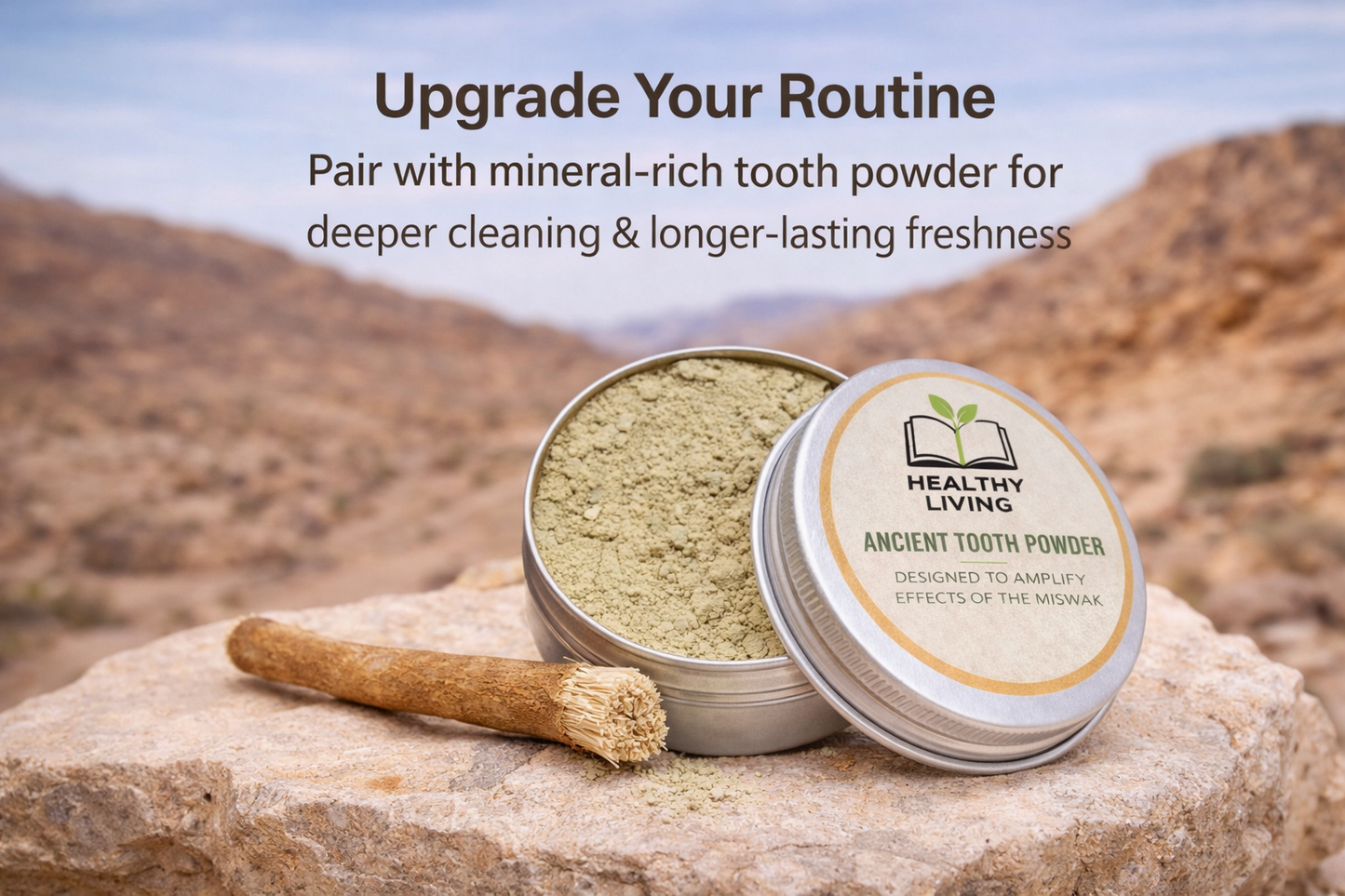
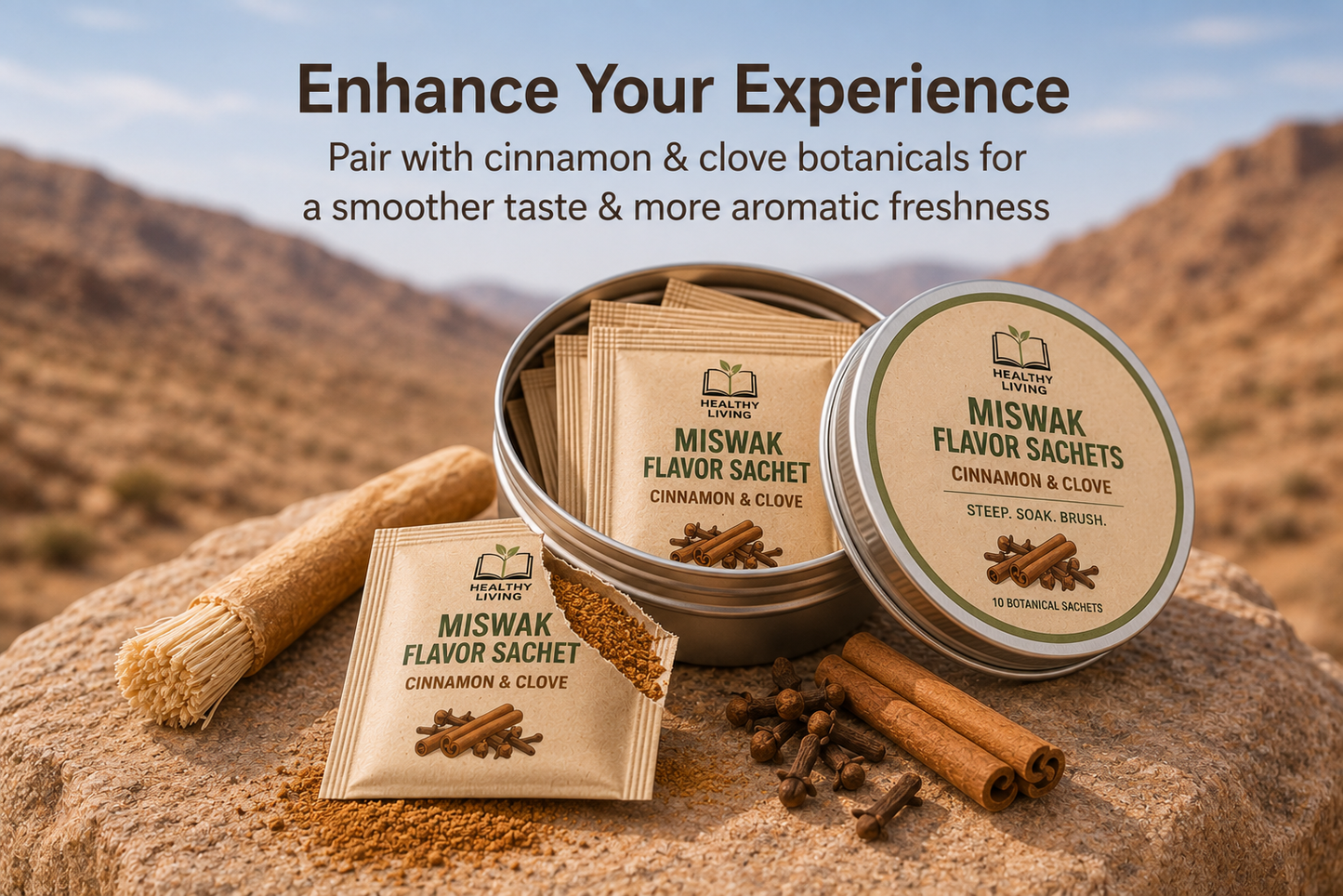

Tackles the root cause instead of covering up the problem
The miswak not only cleans, it also provides the teeth with natural minerals to strengthen the enamel from the inside out.
Purple color correctors make your teeth look whiter temporarily by stripping away the outer enamel.
Fluoride toothpastes only coat the teeth temporarily inside of strengthening the entire tooth structure.

Harvested in Its Purest Form
Sourced fresh in small batches from naturally grown Salvadora persica trees, each miswak stick is harvested in its purest form, free from chemicals, treatments, or artificial processing. We work directly with growers in native regions to ensure authenticity and quality at every step. Once cut, each stick is carefully vacuum-sealed to preserve its natural moisture, potency, and freshness, so it arrives ready to use exactly as nature intended.
Backed by science
-

Not just a 'fad'
View studyDoctors and researchers have studied miswak for years. It’s been shown to help fight plaque, protect gums, and clean teeth naturally.
-
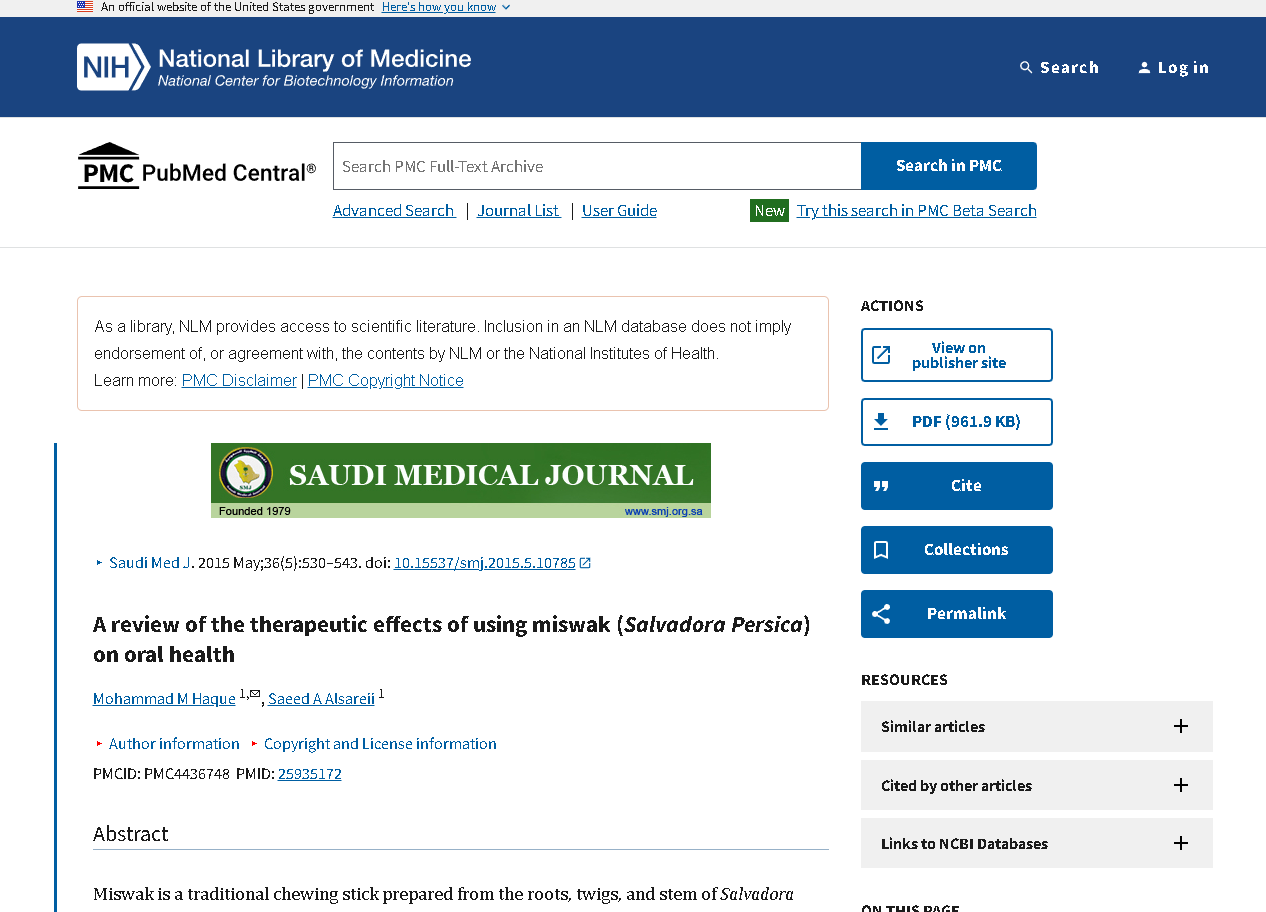
Trusted for Generations
View StudyLong before toothpaste, people used miswak. It’s still used today because it works. Science is finally catching up to what our ancestors already knew.
-
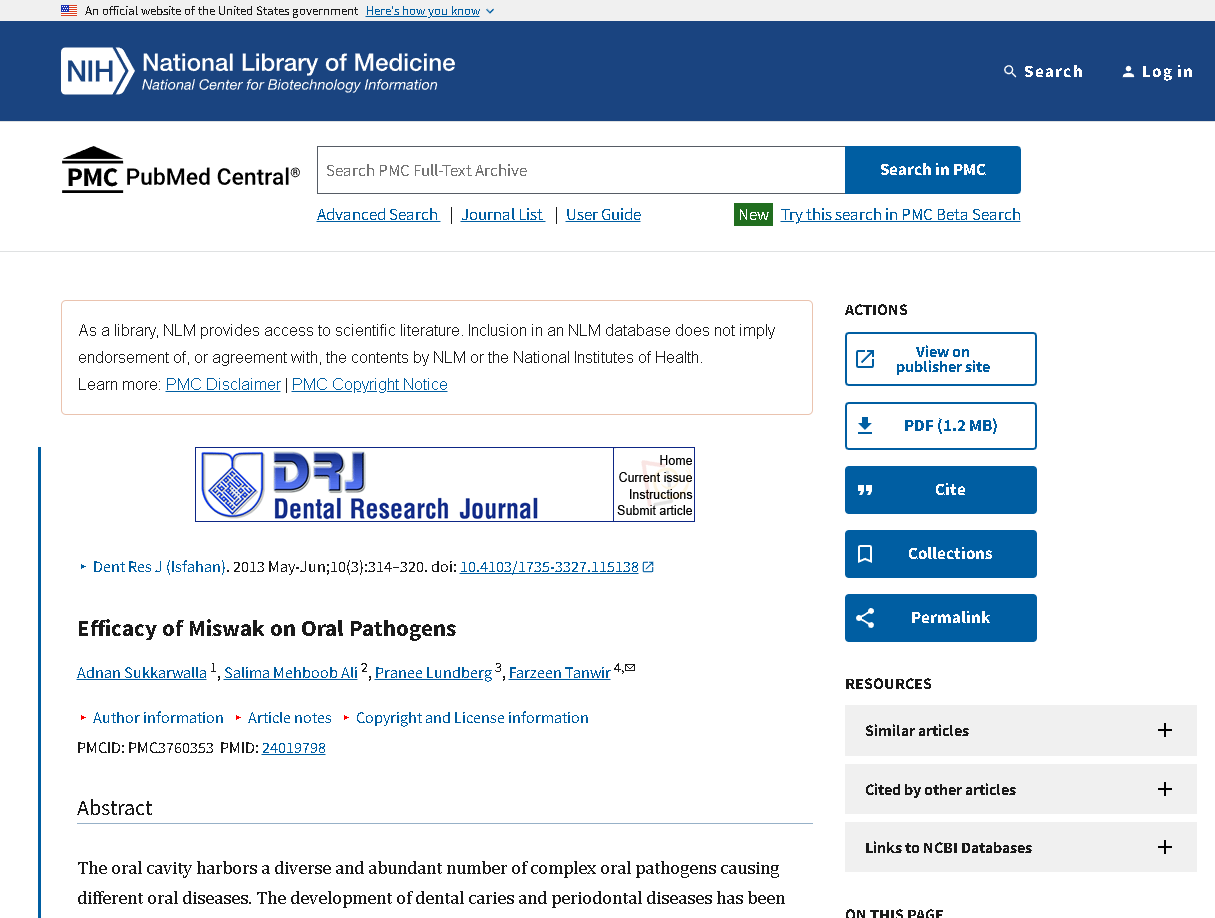
Time-Tested and Proven
View StudyMiswak isn’t just tradition. Studies show it can work as well as, or better than, modern toothbrushes. Nature made it right the first time.

