How does a stick give these tribes sparkling white teeth — with no toothbrush or toothpaste?
Why teeth lose their whiteness?
Teeth appear white when the enamel is healthy. When the enamel thins, the yellow dentin shines through.
Enamel is the hard, translucent outer layer of your teeth. Underneath it is dentin — which is naturally yellow. The thicker your enamel, the whiter your teeth look. The thinner it gets, the more that yellow shows through.
Every time you eat or drink, acids dissolve a tiny layer of mineral from your enamel. Your saliva naturally repairs this — it carries calcium and phosphate back into the tooth surface. Lose minerals, regain minerals. This cycle runs every single day.
Healthy saliva is determined by having: a balanced pH, enough minerals, the right bacteria. Only then can your teeth maintain their whiteness naturally.
Problems start when the loss outpaces the repair. Stains soak into weakened enamel. The yellow dentin underneath starts showing through. That’s why your teeth often start feeling sensitive before anything. And no amount of surface scrubbing fixes it — because the problem isn't on the surface. It's inside the enamel itself.
A good oral care routine should have these 3 things:
Mechanical Scrubbing
Remove surface stains, food debris, and plaque.
Remineralization
Put minerals back into the enamel to keep it thick, strong, and white.
Antibacterial
Target harmful bacteria without disrupting the balance your saliva needs to do its job.
Real whiteness comes from all three working together. Your plastic toothbrush only does the first one. It scrubs the surface. No minerals go back in. No protection for the good bacteria your mouth actually needs.
Toothpaste helps with bacteria — but most formulas contain detergents that disrupt your saliva's pH. That's why your mouth often feels acidic in the morning. The paste killed bacteria overnight but threw off the environment your saliva needs to repair your enamel.
So if plastic only does one of the three things your teeth need to stay white — why did we switch to it 80 years ago?
We switched to a worse method.
Chewing sticks are seen as primitive now, but for 7,000 years they were the standard. Across Africa, the Middle East, and Asia, people cleaned their teeth with sticks from specific trees — sticks that scrubbed, remineralized, and protected all at once. The tool and the oral care were the same object.
Then 80 years ago, the world switched to plastic. It was new. It was exciting. It promised extraordinary results. The foam and the mint made people believe their teeth were being taken care of. And slowly, an entire planet was conditioned to think sticks were backwards and plastic was progress.
It's similar to what happened with food. For most of history, humans ate fruit, vegetables, and whole grains. Then processed food arrived — convenient, tasty, heavily marketed. And over time, the original was replaced by something that looked better but nourished less.
The same thing happened to your toothbrush.
As the decades went by, our teeth got worse — not better. Today, 90% of American adults have had at least one cavity. Dentists are in higher demand than ever. And nobody asks the obvious question: if we have the most advanced oral care in history, why are our teeth still deteriorating?
Because we were never taught the root cause. We were taught to scrub harder, visit the dentist more, and buy another tube of toothpaste. Nobody told us our teeth were starving for nutrients.
The answer is simpler than you think
The secret behind their 7,000 year old stick
Here's a side by side comparison:
Your toothbrush only takes. It doesn't give back. Plastic bristles are built to remove debris off the surface. But each stroke can also scrape minerals off your enamel if you're not careful. Your toothbrush can't replace these lost minerals. It can only scrub.
It's why the tribes never switched to plastic. They didn't reject the toothbrush because they didn't know about it. They rejected it because they already had something better.
30-day money back guarantee
Difference between our methods and their stick
No chemicals. No toothpaste. No plastic.
🦷 Whiter Teeth
❌ Whitening strips bleach and weaken enamel. ✓ Miswak has natural silica that polishes and lifts stains while strengthening the enamel with calcium and other minerals.
🛡️ Kills Bad Bacteria
❌ Antibacterial rinses wipe out your entire oral microbiome. ✓ Miswak's 19+ natural compounds target harmful bacteria and leave the good ones intact.
💨 Eliminates Bad Breath
❌ Mouthwashes kill all bacteria — good and bad — and within an hour, the bad bacteria comes back stronger. ✓ Miswak removes the food debris that bacteria feed on and its antiseptic sulfuric compounds only target the bad bacteria causing the smell.
🌱 Strengthens Gums
❌ Sensitive toothpastes numb the symptom with potassium nitrate. ✓ Miswak's tannins and anti-inflammatories reduce swelling and build stronger tissue.
✅ No Toothpaste Needed
❌ Synthetic toothpaste, plastic toothbrush. ✓ Miswak replaces both and leaves no mess.
🌍 7,000 Years of Proof
❌ Modern products rely on 6-week trials funded by the companies selling them. ✓ Miswak has 7,000 years of continuous daily use across three continents.
The first 30 days with miswak.
Switching to miswak feels different at first — but that’s the point. Here’s what many people notice as their mouth adjusts to a more natural routine.
Getting used to it
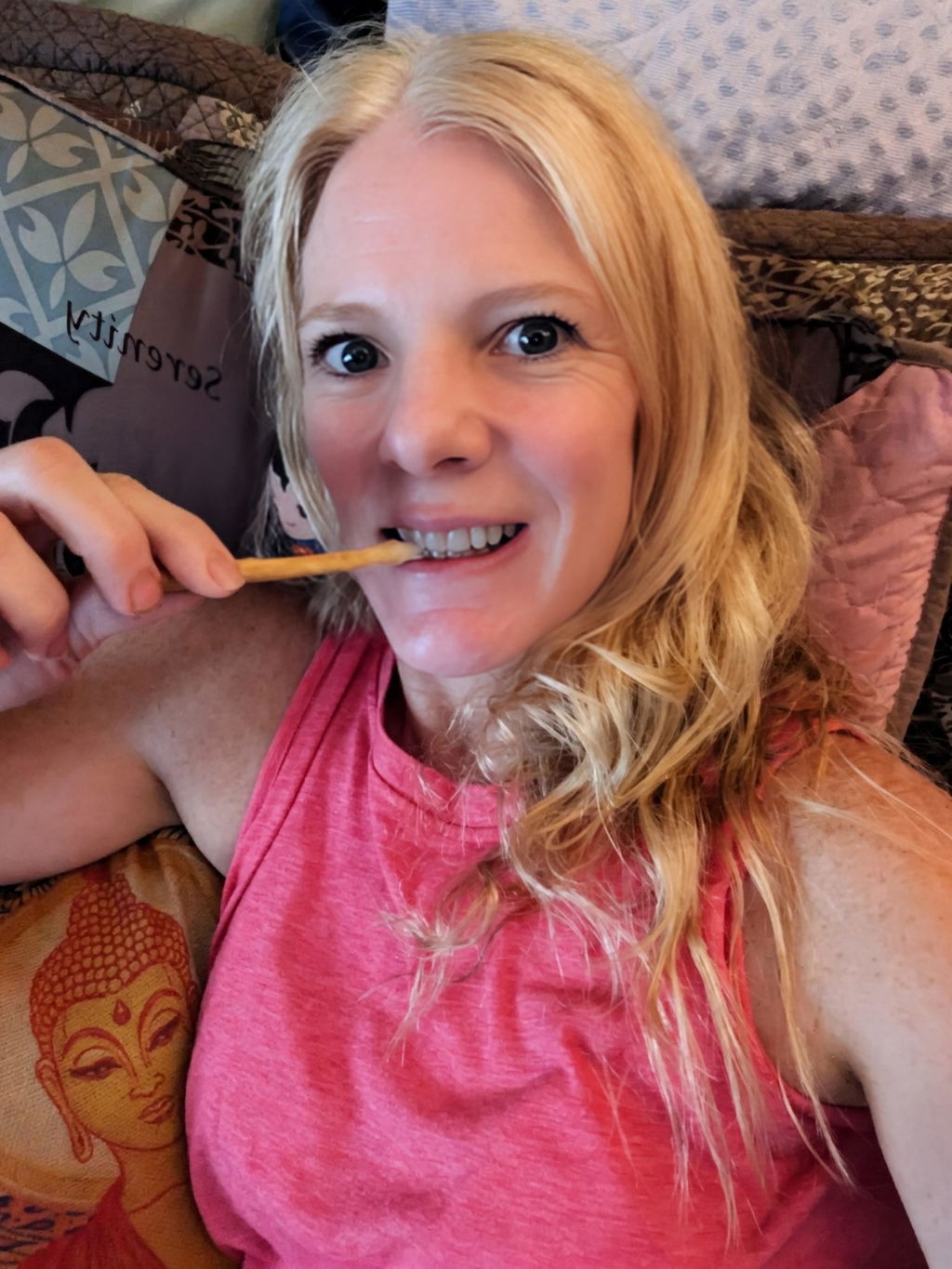
First-use clean feelingThe first use feels different. You struggle a bit, The taste is earthy, the fibres feel unfamiliar, and brushing without foam feels strange. But after you use it once, you instantly notice your teeth feel cleaner and smoother.
A note on individual results: Everyone’s starting point is different. This timeline reflects common outcomes reported in a survey of 312 miswak users, but results vary based on diet, consistency, staining, and existing oral health. We can’t promise identical results for everyone — but we can promise this: if you use it properly and consistently, your teeth will feel cleaner, smoother, and fresher than before you used it.
The world is rediscovering it.
For thousands of years, this stick quietly remained one of the world's best kept oral care secrets. Now millions of people are seeing it for the first time.
Ready in 30 seconds.
Lasts weeks.
Peel back 5mm of bark
Exposes fresh fibres — these are your bristles.
Chew the tip until soft
Takes ~30 seconds. Fibres naturally splay out like a brush head.
Brush — no toothpaste needed
Cleans, whitens, and freshens breath all in one go.
Trim & repeat
When the tip wears, trim and chew a new section. One stick lasts weeks.