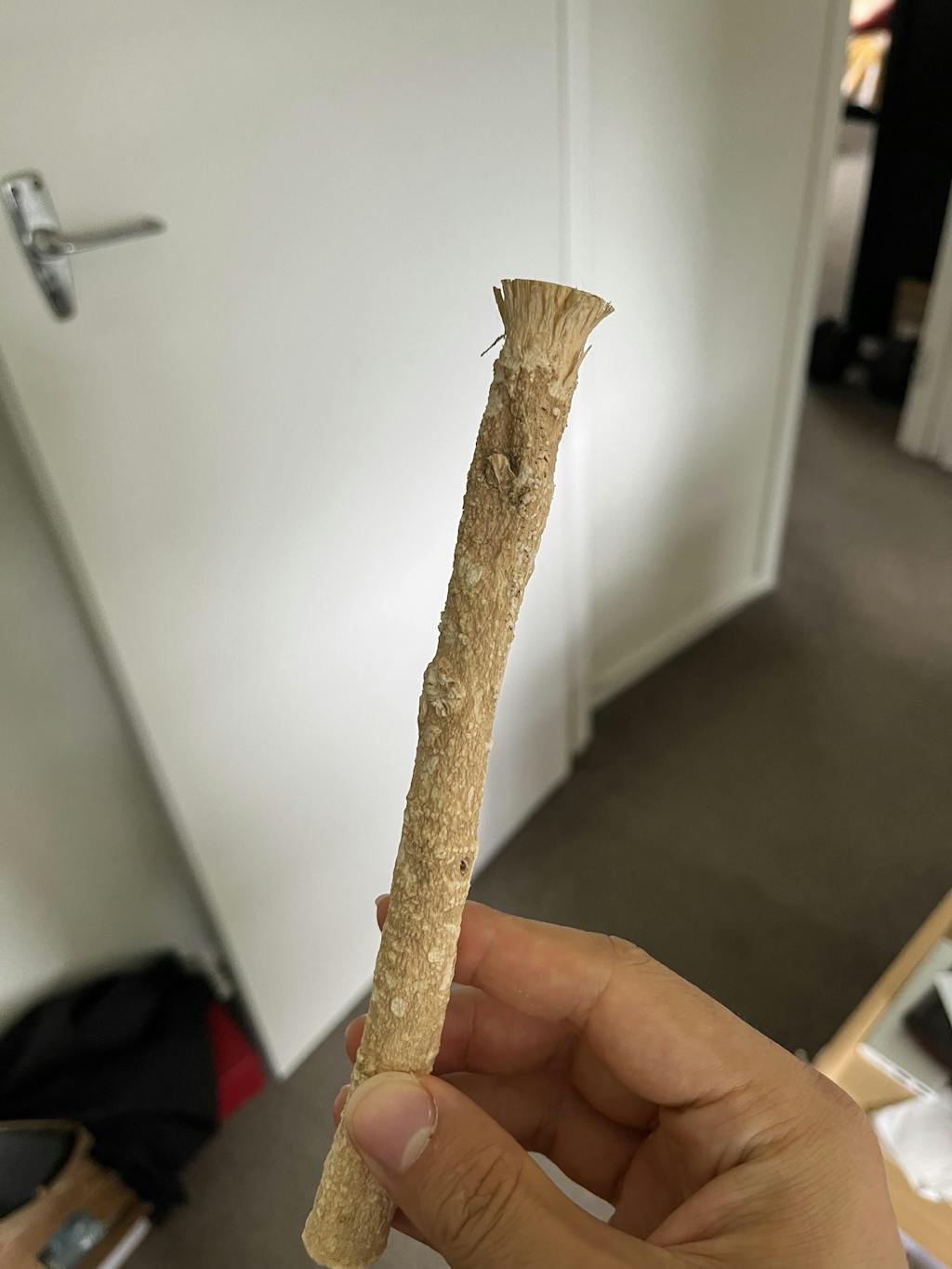
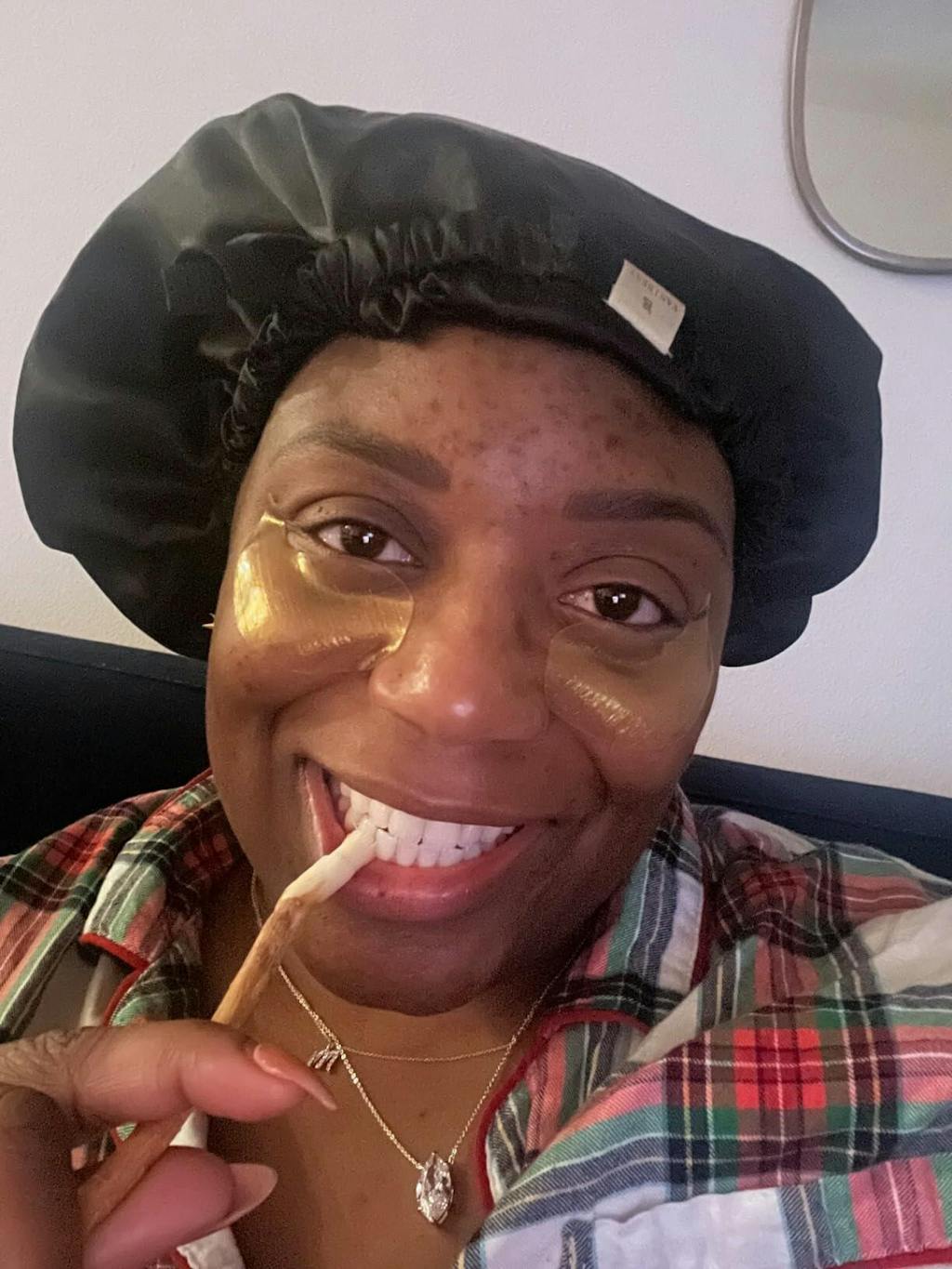
"Not only does it make your mouth feel fresh and your teeth super silky, it also clears stains and discoloration that have been around for years"
The tribes know something we don't
How does a 7,000 year old stick grant you strong and white teeth?
4.8/5 from 15,000+ verified buyers
Grab the Miswak — 30 day guarantee
Whitens and freshens breath
Kills bacteria
Full of healthy minerals
7,000+
years of uninterrupted use across Africa & the Middle East
15,000+
verified buyers, 4.7-star average rating
WHO
recommended miswak as an effective oral hygiene tool

2023 study: microplastics found in 80% of human saliva samples
Researchers linked the contamination directly to plastic toothbrush bristle degradation — the same bristles you put in your mouth twice a day.
Let's take a step back and think about this for a second
Who came up with
Plastic?
About 100 years ago, someone decided we should scrub our gums twice a day with a device made from solidified petroleum slurry. Nylon bristles. Polypropylene handle.
Plastic that takes 400 years to decompose, going straight into your gums.
It was actually an excellent idea.
Just not for us.
The math
A product that costs pennies to make, sells for five dollars, and needs replacing every three months. Forever.
Within a generation
The plastic toothbrush became the only tool anyone considered. The stick that an entire continent had been using for 7,000 years was seen as 'backwards.'"
That's not dental care.
That's a subscription model disguised as hygiene.
Nobody asked whether any of it was actually making our teeth better. Cavity rates have climbed every decade since. Meanwhile, the plastic brush does this to your mouth every morning.
- Plastic bristles shed microplastics with every use — directly into your saliva, absorbed through your gum lining, circulating in your bloodstream
- Frayed bristles harbour bacteria in the gaps between fibres — bacteria you reintroduce into a freshly cleaned mouth the next morning
- SLS foaming agents in most toothpastes disrupt your oral microbiome — stripping the environment your enamel depends on to remineralise every night
- The plastic brush is 100 years old. Every civilisation before it maintained healthy teeth without one. That is not a coincidence.
Miswak fibres are naturally antibacterial. They don't degrade into your saliva. They don't harbour bacteria between uses. They've been put in human mouths every morning for 7,000 years — and they were designed by nature to be there.
The message is spreading.
The stick that’s been going viral everywhere
Ancient Miswak Toothbrush 1pc
Ancient Miswak Toothbrush 1pc
Regular price
$7.99 USD
Regular price
$15.99 USD
Sale price
$7.99 USD
Unit price
per
- Whitens & Remineralizes
- Removes Plaque Naturally
- 7-14 Days Shipping Worldwide
Couldn't load pickup availability
In Stock: Only 17 Items Left
Ever wonder why the Arabs and Africans have such beautiful teeth?

How can a stick be better than whitening strips?
How can a stick be better than whitening strips?
Before there were plastic toothbrushes and chemical-laden toothpaste, nature provided its own solution: the Miswak. Harvested from the Arak tree, Miswak has been used for over 7,000 years for its powerful, natural cleansing properties. This ancient toothbrush doesn’t just clean your teeth. It naturally whitens, strengthens gums, and freshens breath without a single chemical in sight.
Today, we’ve been conditioned to rely on harsh, synthetic solutions, whitening strips, synthetic toothpastes, and artificial chemicals that promise quick results but don’t last. We chase temporary fixes, often at the expense of long-term oral health.
But for thousands of years, people didn’t need any of that.
The truth is, nature already solved this. The Miswak has been proven to work for 7,000 years. Works so well you don't even need toothpaste.
A simple, effective way to clean and protect your teeth. It's how oral care was supposed to be, before we overcomplicated the process.
Why does the miswak work better?
Why does the miswak work better?
Miswak contains all naturally occurring compounds that not only scrub your teeth, but restore it. No chemicals are added.
- Salvadorine, Tannins, Saponins & Alkaloids — naturally antibacterial compounds that help eliminate harmful oral bacteria and reduce plaque buildup
- Calcium, Fluoride, Silica & Potassium — essential minerals that strengthen enamel, support remineralization, and help prevent tooth decay
- Anti-inflammatory Compounds — reduce gum irritation and support healing, promoting long-term gum health
- Silica — acts as a gentle natural abrasive to remove surface stains and gradually whiten teeth
- Natural Antimicrobial Action — helps prevent plaque formation more effectively than conventional brushing methods
- Plant Fibers & Antibacterial Properties — clean between teeth while neutralizing odor-causing bacteria for fresher breath
A Note on Flavor
A Note on Flavor
The distinctive taste and aroma of miswak come from its naturally occurring tannins and active plant compounds, the same elements responsible for its antibacterial and cleansing properties. We do not artificially flavor our miswaks so it can retain its authenticity. For those who prefer a more familiar taste, the experience can be gently refined by soaking the tip in a light infusion of clove or cinnamon water. This not only softens the flavor but also enhances its natural antibacterial qualities making it taste better and more effective.
How to Use Miswak – Simple Guide
How to Use Miswak – Simple Guide
Step 1: Soften & Prepare the Tip
Soak the miswak stick in warm water for 10–20 minutes the first time you use it. This softens the fibers for easier chewing.
Trim about 0.5 to 1 cm off the bark at the tip (you don’t need to cut too much).
Gently chew the tip with your molars until the fibers separate into a brush-like form.
Step 2: Brushing Technique
Use the miswak like a toothbrush but brush vertically or in small circular motions, not horizontally (to protect your gums).
Spend about 1–3 minutes per session, not necessarily 30 minutes per tooth, miswak is often used multiple times a day (e.g., after meals or prayer).
Focus on both teeth and gums, miswak naturally massages and cleans both.
Step 3: Cleaning & Storage
After use, rinse the tip under running water to clean off residue.
Cut off the bristled tip every few days (or once it feels dry, flavorless, or worn) to reveal a fresh section.
Store in a breathable container or an anti-mold holder. Bamboo is great, just make sure the case isn’t fully airtight, especially if the miswak is damp.
🔄 Is it Normal for Miswak to Dry Out?
Yes, miswak can dry out over time, especially in dry or air-conditioned environments. If it feels too stiff:
Soak it again in warm water for a few minutes before use, it should soften back up.
If it doesn’t revive or feels flavorless, trimming to a fresh section is the right move.
Guarantee and Warranty
Guarantee and Warranty
All of our miswak sticks are naturally extracted from the Salvadora persica tree and sourced fresh
We offer a 30 Day Money Back Guarantee. If you don't like the stick for any reason you keep it for free!


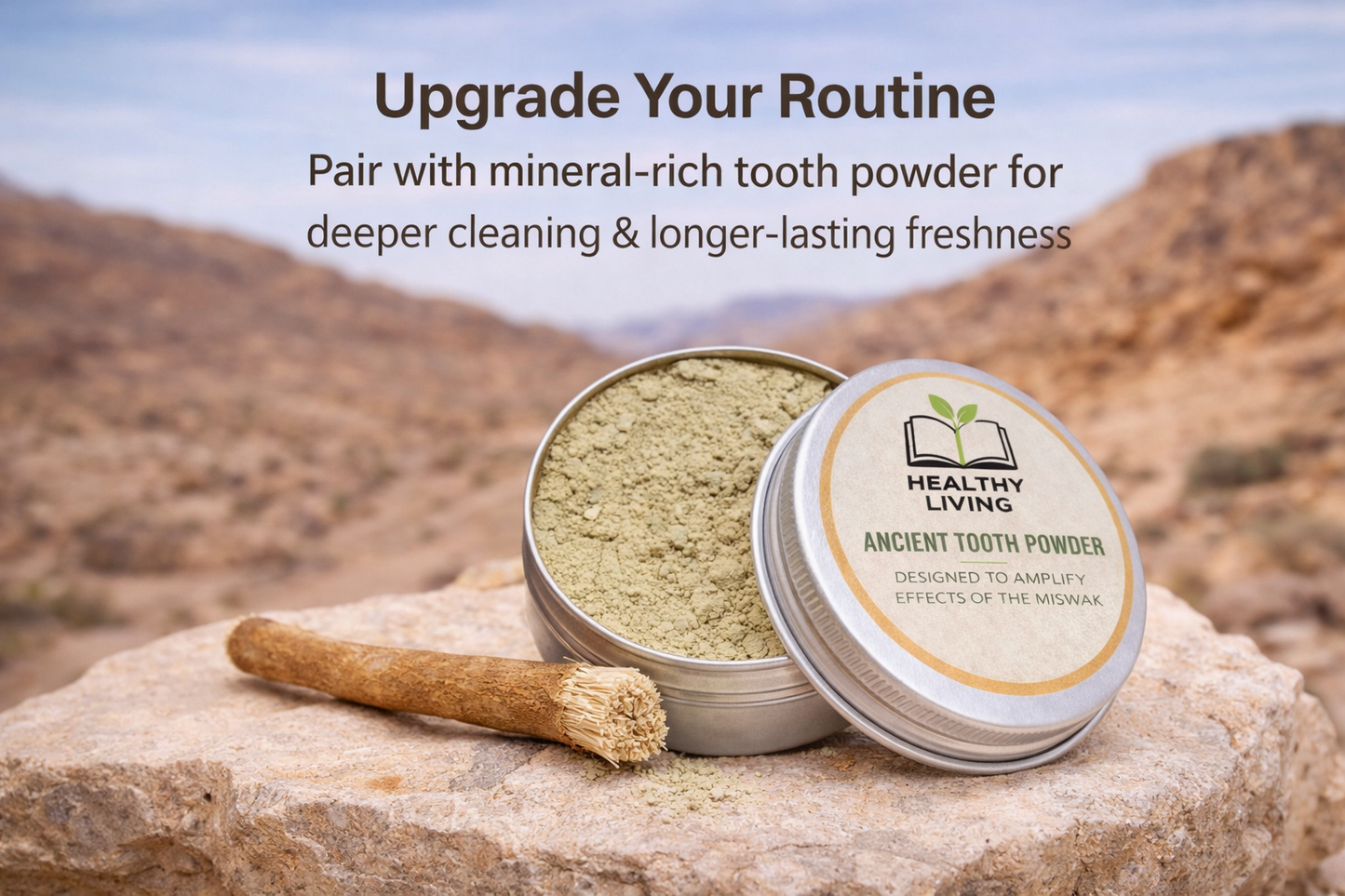

Tackles the root cause instead of covering up the problem
The miswak not only cleans, it also provides the teeth with natural minerals to strengthen the enamel from the inside out.
Purple color correctors make your teeth look whiter temporarily by stripping away the outer enamel.
Fluoride toothpastes only coat the teeth temporarily inside of strengthening the entire tooth structure.

Harvested in Its Purest Form
Sourced fresh from naturally grown Salvadora persica trees, each miswak stick is harvested in its purest form, free from chemicals, treatments, or artificial processing. We work directly with growers in native regions to ensure authenticity and quality at every step. Once cut, each stick is carefully vacuum-sealed to preserve its natural moisture, potency, and freshness, so it arrives ready to use exactly as nature intended.
Backed by science
-

Not just a 'fad'
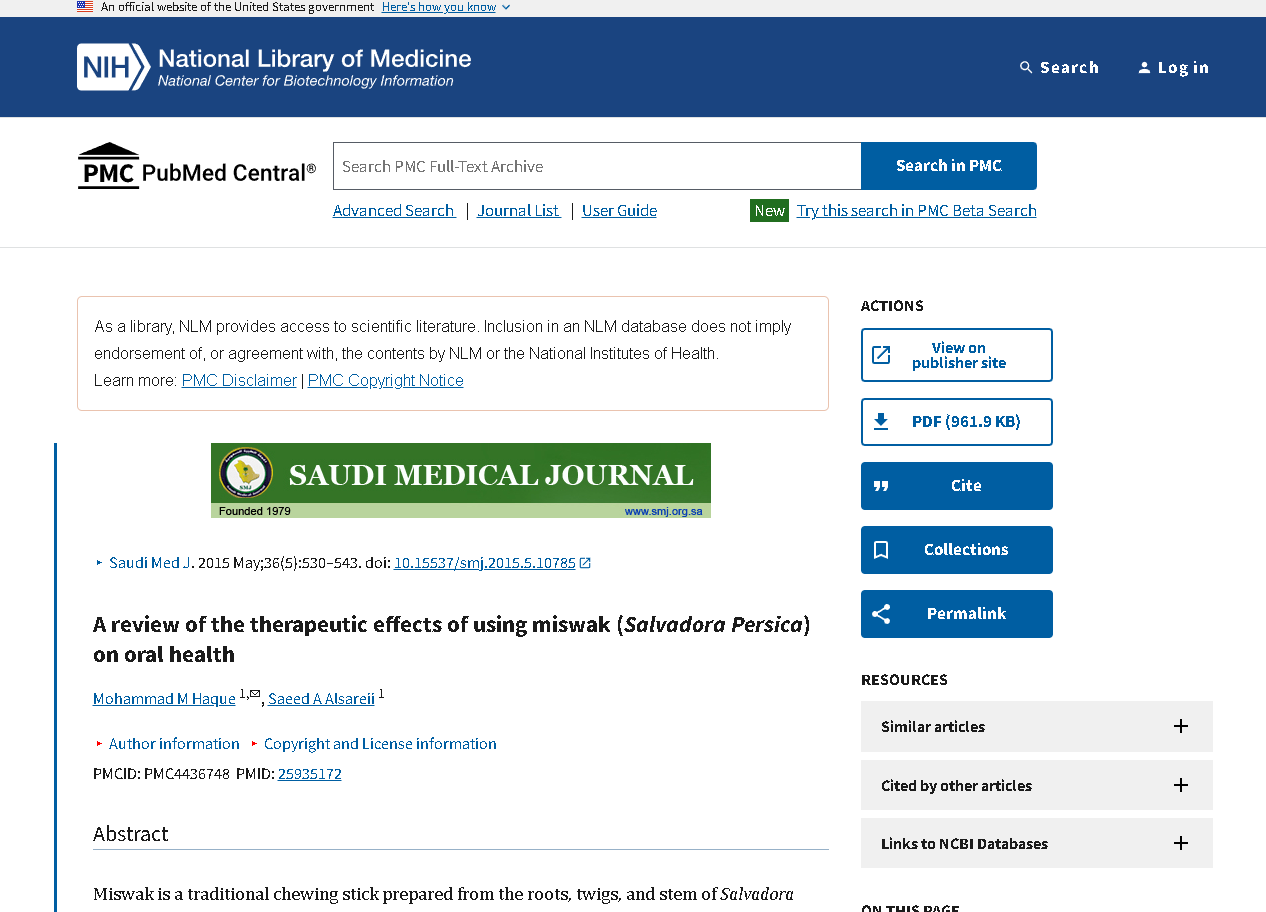
View studyDoctors and researchers have studied miswak for years. It’s been shown to help fight plaque, protect gums, and clean teeth naturally.
-
Trusted for Generations
View StudyLong before toothpaste, people used miswak. It’s still used today because it works. Science is finally catching up to what our ancestors already knew.
-
Time-Tested and Proven
View StudyMiswak isn’t just tradition. Studies show it can work as well as, or better than, modern toothbrushes. Nature made it right the first time.